What is brand activation? Discover how campaigns, events and real-world experiences help people engage with a brand, with examples and practical advice.
Quick answer: Brand activation is a campaign that gives people a reason to actively engage with a brand rather than simply notice its advertising. It might involve trying a product, attending a live experience, joining a challenge, visiting a pop-up, participating in a demonstration or sharing something they have created. The goal is to turn awareness into a memorable action and, ultimately, a stronger connection with the business.
There is a difference between seeing a brand and doing something with it. A poster can make someone aware of a new drinks company; a tasting stand can let them discover the flavour. A sponsored sports banner gets the logo in view; a branded skills challenge gives fans a story to tell. That shift from passive exposure to participation is what makes brand activation interesting.
The term covers a wide range of activity, and it is frequently used too loosely. Merely putting a logo on a wall is not automatically an effective activation. The important question is: what will the audience experience, choose, learn, try or do as a result?
This guide explains what brand activation means, the main types of activation, what makes one work, how to judge the results and how to capture its value on video.
How does brand activation work?
A strong activation usually connects five things: a recognisable audience need, one useful or enjoyable interaction, a clear connection to the brand, a sensible next step and a way to measure whether the experience mattered.
Imagine a company launching a new range of outdoor clothing. It could hire a stand at a weekend festival and display jackets on a rail. Alternatively, it could build a small weather-testing zone in which visitors try the garments under a controlled rain effect. The second idea puts the product promise to the test. The rain effect is not the strategy; giving potential customers confidence in waterproof performance is.
You can simplify the mechanics into a sequence:
- Attract attention: A problem, demonstration, spectacle or invitation gives people a reason to stop.
- Create participation: Visitors do something more meaningful than collect a leaflet.
- Deliver the brand promise: The experience proves or expresses what the brand wants to be known for.
- Offer a logical next action: Try a sample, book a demonstration, join a community, scan an event-specific offer or speak with a representative.
- Extend the experience: Follow-up content, authorised photographs, event footage or useful emails make the moment matter beyond the venue.
Not every activation needs every visitor to buy immediately. A new product launch might prioritise trial and awareness, while a B2B showcase may aim for booked demonstrations and qualified conversations. Define success before you start designing the stand.
Brand activation vs brand awareness vs experiential marketing
These terms are related, but they are not interchangeable.
| Term | Primary purpose | Typical example |
|---|---|---|
| Brand awareness | Make more people recognise a name or idea | Outdoor advertising introducing a new business |
| Brand activation | Prompt active engagement that reinforces a brand | Visitors testing the product and sharing a result |
| Experiential marketing | Build a brand connection through an experience | An immersive pop-up that lets visitors explore a product world |
| Event marketing | Use an event to achieve a marketing objective | Product demonstration day for invited buyers |
| Sponsorship activation | Put commercial sponsorship rights to useful work | A sponsor-led fan challenge at a sports fixture |
An activation can sit inside an experiential campaign, live event, exhibition or sponsorship. These categories overlap. What matters more than the label is whether the activity has a purpose and is easy for people to understand.
The main types of brand activation
Product sampling and hands-on demonstrations
Sampling makes particular sense for food, drink, beauty and products whose benefits are easier to experience than explain. A thoughtful tasting or demonstration includes staff who can answer questions, a clear indication of what makes the product different and a way for interested visitors to find or purchase it later.
For a premium food launch, capturing the preparation, product detail and honest first reactions can be more persuasive than filming generic footage of a crowded room. Avoid directing people to give favourable testimonials; film genuine reactions from those who have agreed to appear.
Pop-up shops and temporary experiences
A pop-up gives a brand a temporary physical home. It might introduce a collection, test demand in a new city, reach a particular audience or generate attention around a launch. The design must support the reason for visiting: discovery, trial, advice, exclusive access or community.
A good pop-up can be small. A carefully presented demonstration area with a clear customer journey often beats a lavish installation that visitors cannot work out how to use. Explore the detailed planning advice in our guide to pop-up events.
Festivals and public-facing events
Festivals bring a concentrated audience, but attention is competitive. Visitors may have dozens of stands to choose from, and they are unlikely to queue for a generic branded backdrop. A simple activity with an immediate reward, useful facility or entertaining challenge can work better.
Think about the audience’s state of mind. At a music festival, shelter, charging, water access where appropriate and short entertainment moments may be more welcome than a complex sales pitch. Be mindful of permissions, sponsorship categories, age restrictions and what the festival allows you to film.
Community experiences
A running group, creative workshop, product clinic or skills session creates repeated reasons to spend time with the brand. These are particularly suited to businesses built around learning, belonging or shared interests.
adidas Runners London offers a useful example of how a branded running community creates an ongoing relationship instead of a single promotional touchpoint. The lesson is consistency: people come back when the experience is valuable in its own right.
Digital and hybrid activations
Digital activation may involve an interactive challenge, personalisation tool, virtual experience or a physical activity that unlocks a shareable online result. A QR code by itself is not an activation. It should help visitors do something worth doing.
Coca-Cola’s Share a Coke illustrates the principle of personalisation; the campaign used names on packaging, then extended the interaction through digital features and sharing. The participation was easy to explain in one sentence.
Retail and in-store activations
Live demonstrations, repair clinics, styling advice and product education can build a stronger relationship within a retail environment. The location matters: there must be room to take part without disrupting normal store operations, and any filming plan should respect shoppers who do not wish to appear.
B2B and trade activations
In business-to-business marketing, the most persuasive activation may be a live technical demonstration rather than an elaborate spectacle. An engineering company could show a component under stress; a software business could let visitors solve a realistic workflow problem; a manufacturer could bring a compact, working model of a larger system.
The experience needs to help a buyer make progress. Record useful technical explanations and decision-maker interviews, not just reaction shots of people applauding a presentation.
What makes a good brand activation?
The idea needs to belong to the brand. A free coffee cart can increase dwell time, but if the campaign is for a cybersecurity company and the coffee bears no relation to its message, the brand may be forgotten. A short interactive security challenge, combined with refreshments, has a clearer role.
The experience must be easy to join. Walk past your idea mentally as someone who has never heard of it. Can they understand the invitation in a few seconds? Will they know how long it takes? What happens if they do not want to share their data or be filmed?
Build for real conditions, not only the mood board. Weather, queues, background noise, disabled access, staff breaks and poor signal can change a campaign quickly. Put the essential interaction first, and design a fallback if the technology fails.
Make participation worthwhile. Visitors should get value even if they never purchase: a helpful insight, memorable experience, genuine skill, sample or enjoyable moment.
Leave room for honest behaviour. Unscripted answers and authentic reactions are usually more compelling than asking every attendee to repeat a promotional slogan to camera.
Three examples worth learning from
Coca-Cola: Share a Coke
Coca-Cola originally launched the personalised packaging idea in Australia in 2011 and has since developed it into new physical and digital experiences. The mechanics are memorable because the product itself becomes the invitation to participate: find a name and share a drink. Coca-Cola’s campaign history describes the original idea and its travelling customisation kiosks.
Lesson: Ask whether your customer can participate without a lengthy explanation.
Patagonia: Worn Wear
Patagonia has used Worn Wear storytelling, repairs and touring activities to reinforce the idea of extending the life of clothing. The activity expresses a practical belief, rather than simply saying the company cares about sustainability. Patagonia’s Worn Wear archive documents its tour and repair approach.
Lesson: The strongest activation may demonstrate a principle rather than introduce a new product.
Airbnb and the Louvre
In 2019, Airbnb and the Louvre created a competition to spend a night at the museum. It offered an extraordinary version of the product promise: staying somewhere unforgettable. The official announcement explains the experience and its accompanying museum programme.
Lesson: An idea does not always need thousands of physical participants to be understood and discussed by a much larger audience.
For more researched campaigns, see our brand activation examples.
How to plan a brand activation without wasting money
Start with an outcome, not a venue. Write one sentence such as: “We want decision-makers in independent gyms to request a demonstration of our new member app.” Then identify the audience’s biggest obstacle: do they not know the product exists, do they doubt it works, or do they need evidence that it will save time?
Choose an interaction that addresses that obstacle. Decide the location based on audience access rather than how photogenic it looks. Build a realistic budget that includes staffing, logistics, accessibility, permissions, insurance, signage, technical equipment, travel, data capture, photography, videography and post-event distribution.
Give one person responsibility for the entire visitor journey. A visitor should not meet three different team members who each assume someone else will make the offer or capture the lead.
Finally, plan the follow-up before the event starts. The organiser should know what happens to a qualified enquiry within one working day, who distributes the footage and what happens if there are no useful customer testimonials. Our brand activation strategy guide includes a full planning framework.
How do you measure whether it worked?
Different campaigns need different measures. Useful indicators include footfall, participation rate, completed demonstrations, qualified contacts, product trials, sample redemptions, bookings, subsequent purchases and repeat engagement. Distinguish measured results from estimates and avoid reporting reach as though it were revenue.
For example, if 1,000 people pass a stand, 180 stop and 45 book a consultation, you have three different numbers: reach opportunity, participation and a defined commercial action. Make sure data capture is lawful and voluntary where required. A queue does not automatically mean a successful activation if it prevents the people you need to reach from getting involved.
A short post-event report can compare outcomes with costs, explain which moments attracted participation and recommend changes. Filmed interviews and event footage may help communicate the event’s story, but do not confuse a polished highlight video with evidence of business impact.
Why plan videography before the activation?
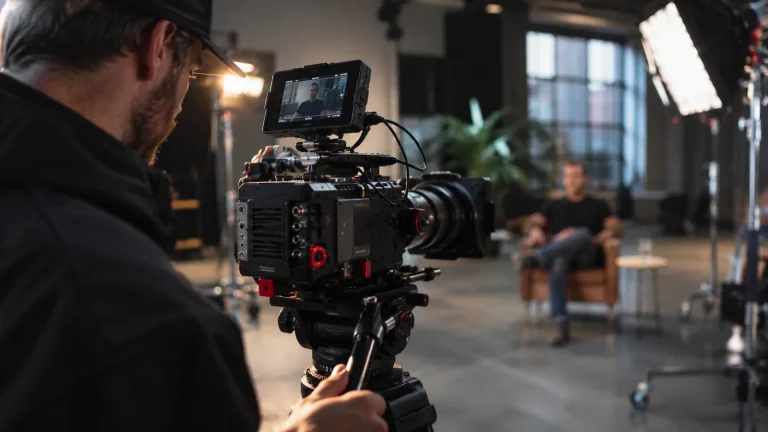
The live event may last a few hours, but useful footage can keep the campaign working. The brief should specify the main brand message, the moments that prove it, the audience for each edit and where the final videos will appear.
A practical filming plan might include a short event highlights film, three vertical social clips, a clear demonstration, an interview with the organiser and an approved testimonial. Some brands need a quick same-day edit; others get more value from a careful post-event film. Decide this before hiring a crew because turnaround affects access, staffing and editing requirements.
Ask the venue about filming permissions; agree how identifiable visitors will be informed and how any necessary permissions will be collected; plan a quieter area for interviews. If children, restricted venues, athletes, recorded music or third-party branding are involved, arrange appropriate rights and safeguards rather than hoping they can be fixed in the edit.