Planning a pop-up event? Learn how to choose a venue, build the visitor journey, budget, arrange filming and measure results for a UK brand event.
A pop-up event is a temporary experience built around a specific purpose: launching a product, reaching a new audience, testing a market, hosting a community or making a campaign feel tangible. It might be a compact shop for one weekend, a short-running installation inside a shopping centre, an outdoor demonstration or a venue takeover built around a single brand idea.
The best pop-ups give people more than somewhere to browse. They give them a reason to enter, a worthwhile experience while they are there and a reason to remember the brand afterwards. A beautifully designed space with no clear purpose may photograph well, but it rarely makes the strongest use of the organiser’s budget.
This guide covers how to plan a pop-up in the UK, choose a suitable location, create a visitor journey, manage practical requirements and film content that makes the event valuable long after it closes.
What is a pop-up event, exactly?
Unlike a permanent shop or regular exhibition, a pop-up has a defined start and end. Its short duration can create urgency, but scarcity alone is not a strategy. Temporary space is often useful because it lets a business test an idea without committing to a permanent venue.
A pop-up shop is mainly retail-led. A brand pop-up might focus on a wider experience, such as a product demonstration, installation, workshop or live interaction. A pop-up activation adds a clear action connected to the brand’s marketing objective. The categories overlap, and organisers frequently use the terms interchangeably.
A fashion label hosting a four-day showroom to sell stock is running a pop-up shop. If visitors can customise an item, meet the designer, try a styling session and receive a follow-up lookbook, the event also becomes a brand activation.
Why do brands run pop-ups?
To introduce something new
A physical experience makes a launch understandable. A personal-care brand can explain a new product with packaging and ads, but a guided trial lets people test the texture, fragrance or application with help from a specialist. If filming is planned, capture the demonstration without inventing enthusiastic reactions.
To test a new market
A Manchester business considering London can use a small pop-up to learn about demand, pricing, product preferences and the questions customers ask. The aim may be research rather than immediate sales, which should change how the staff are briefed.
To generate useful content
A thoughtfully designed event can produce product shots, interviews, customer education and short social clips. However, content should not be the only reason for the event unless the objective is explicitly a content shoot. An installation that excludes visitors so a camera can get a perfect angle misses the point of a public experience.
To bring a community together
Members, customers, creators and partners may value a temporary place to meet. A craft workshop, club gathering or demonstration can give them a more personal connection with the brand.
To create a retail or cultural moment
Pop-ups are particularly useful for collaborations, limited releases and seasonal campaigns. A compelling temporary space has a beginning, an end and a clear reason why it exists now.
Six practical pop-up formats
| Format | Works well for | Best audience action | Useful filming moment |
|---|---|---|---|
| Product trial bar | Beauty, food, technology | Try and compare | Demonstration and response |
| Temporary showroom | Fashion, interiors, automotive | Explore a collection | Product details and consultation |
| Workshop or class | Lifestyle, education, craft | Learn something | Before-and-after skill moment |
| Creator or community event | Sports, culture, retail | Meet and participate | Conversation and group activity |
| Interactive challenge | Games, fitness, technology | Take part | Challenge, outcome and reaction |
| Pop-up collaboration | Two complementary brands | Discover the partnership | Joint reveal and shared experience |
The format should fit what the business wants people to understand or do. Do not choose an installation because it looks impressive on Pinterest if a compact product clinic would work better.
How to choose the right UK location
The best postcode is not automatically the busiest. Start with where your audience already spends time. A premium interiors pop-up might benefit from a design district or complementary retailer. A sports brand may do better at a club or tournament than on a high street. A business software demonstration could be more useful next to a relevant conference than in a general shopping centre.
Look at the actual space, not only the venue brochure. Ask about passing footfall, who those passers-by are, permitted opening hours, available power, internet reliability, storage, load-in arrangements, lift access, toilet facilities, accessibility, noise limits, signage, photography and filming permission.
If the event depends on talking to guests, test the sound environment at the time of day you plan to operate. An atrium with hard surfaces and live music may make casual interviews almost unusable without a dedicated quiet zone.
For outdoor events, think seriously about rain, wind and changing light. A weatherproof fallback is usually cheaper than trying to rescue an installation after it has already been damaged.
Build the pop-up around one visitor journey
Walk through the experience from the perspective of someone who does not know your brand.
First five seconds: What tells them what is happening? The signage should explain the value, not merely display a logo. “Try our new product in two minutes” is more useful than “The Future Starts Here” if nobody knows what the brand sells.
At the entrance: Is the welcome friendly and low-pressure? If someone must give an email address before discovering what the event is, many relevant people will walk away. Separate optional marketing consent from participation when possible.
During the interaction: Is there a clear beginning and end? Is the activity suitable for different abilities? Can staff keep the queue moving without rushing the experience?
At the exit: What does the visitor receive or learn? It may be a sample, an explanation, a product recommendation or the opportunity to receive follow-up information. The next step should match their level of interest.
Afterwards: Will there be a follow-up email or event-specific landing page? Will there be a useful recap or demonstration clip they can revisit? If so, decide the timing before the event begins.
Planning timeline: an example eight-week pop-up
This is an illustrative schedule, not a universal minimum. Certain locations, permissions, licensing and construction requirements will need longer.
| When | Key decisions |
|---|---|
| 8 weeks out | Audience, objectives, format, budget envelope, likely locations |
| 6 weeks out | Venue, contracts, insurance, access, necessary licences, creative concept |
| 4 weeks out | Layout, suppliers, accessibility, staffing, marketing, content plan |
| 3 weeks out | Test interaction, rehearsals, queue design, data capture, emergency plans |
| 2 weeks out | Printed materials, power/internet test, filming access, talent permissions |
| Event week | Load-in, technical checks, staff brief, customer journey and contingencies |
| After closing | Follow-up, performance review, selective edit delivery, supplier debrief |
An uncomplicated two-day workshop inside an established venue could run on a shorter programme. A street installation with structures, power distribution, public access and regulated activity needs considerably more oversight.
Budgeting: the costs people forget
Venue hire is only one line. Other considerations include deposit, utilities, build and set dressing, furniture, staffing, transport, storage, overnight security, point-of-sale technology, samples, cleaning, accessibility measures, insurance, waste disposal, permits, music licensing, photography and videography. Include contingency rather than assuming every supplier will deliver on the first attempt.
Separate the experience budget from the content budget. If the success of the event depends on next-day social assets, rapid editing has to be staffed and planned. It should not be an unexpected request as the crew is packing away equipment.
A simple budget sheet needs an owner, planned cost, committed cost, final cost and explanation of variance. Compare the budget with outcomes that matter: the number of relevant product trials, appointments or qualified contacts, not only how busy the room looked.
UK permissions, filming and safety considerations
The organiser needs to understand the venue contract, insurance requirements and responsibilities for people on site. The Health and Safety Executive explains the organiser’s coordination duties, including the build and breakdown phases.
In England and Wales, selling alcohol or providing certain regulated entertainment at premises not already appropriately licensed may require a Temporary Event Notice. Check the specific event and location rather than assuming a pop-up is exempt because it lasts one day. Separate arrangements apply in Scotland.
Photos and video of recognisable people may involve personal data. Decide the lawful basis and privacy information for the intended use, and obtain appropriate participant permissions or releases where necessary — particularly for featured testimonials and children. A sign at the entrance is not a universal substitute for every legal or commercial permission.
If there is an influencer partnership, follow the ASA’s guidance on identifying advertising. Rights to music, artwork and third-party brands also need attention. Drones may look exciting in a mood board, but the UK CAA prohibits flying over crowds in the Open category.
How to film a pop-up event properly
The camera plan should mirror the visitor journey rather than interrupt it.
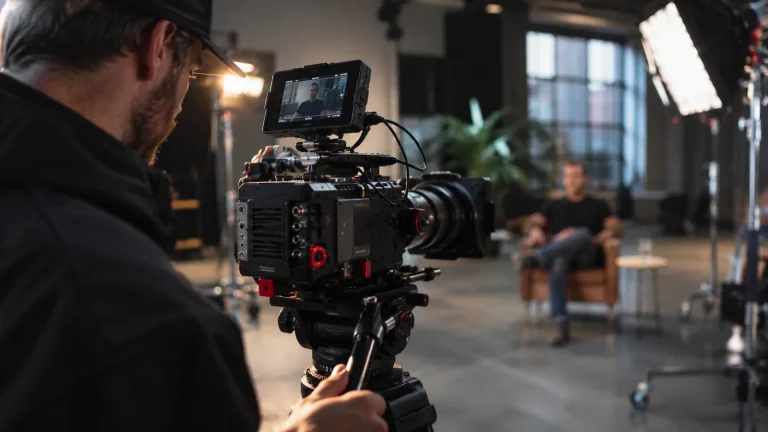
Before guests arrive, capture a clean view of the venue, exterior signage, stand build, product details and any important interactive equipment. Once the event begins, concentrate on participation: how people approach, what they try, what they discover and what makes them react.
For a retail pop-up, prioritise the product and personal consultations. For a food launch, show the preparation and tasting. For a sports activation, capture the challenge, participants and result. For an education or technology event, film the useful demonstration and a concise explanation from someone credible.
If interviews are important, make them optional and create a quiet, well-lit area away from the main sound system. Brief participants clearly about how the footage will be used. Never coach a customer to say something they do not believe.
Suggested deliverables
- A 45–90-second horizontal highlights film showing what happened and why it mattered.
- Three to six vertical clips focused on a single experience, demonstration or reaction.
- A concise product explanation that can live on the website long after the event.
- One or two approved participant or team interviews, where they add genuine value.
- Sponsor or partner coverage showing their actual involvement, not merely incidental logos.
Choose the formats with the campaign team. One shoot does not automatically include every type of edit; prioritisation, access and editing time should be agreed in advance.
Example concepts by sector
Fashion: A small capsule-collection preview where visitors try styling combinations and see how pieces can be worn. Film material texture, consultations and the final looks rather than only a montage of racks.
Food and drink: A timed tasting flight or pairing workshop with a short explanation of ingredients. Film preparation, the sensory details and consenting reactions. Consider allergies, age limits and category-specific advertising restrictions.
Automotive: A vehicle technology demonstration or appointment-based experience. Film the feature in operation, supporting details and an expert’s practical explanation, with care around road use and permissions.
Fitness or padel: A simple skills test followed by coaching advice. Film the activity from suitable safe positions, use an approved filming area and avoid implying participants are professional athletes or endorsers.
B2B technology: A mini-workshop in which a potential customer completes a real task using the product. Film the workflow and an expert explanation; avoid revealing confidential customer or screen data.
Charity: A participatory experience demonstrating the cause or a community-led project. Keep people and beneficiaries at the centre, with dignity, consent and safeguarding considered from the outset.
Common mistakes that undermine a good pop-up
The most frequent problems are straightforward: an unclear offer, a beautiful stand with no meaningful activity, staff who cannot explain the next step, queues that block access, no contingency plan for power or weather, and content created without a distribution plan.
A less obvious problem is designing everything for camera. Visitors should not feel they are on a film set when all they wanted was to try a product. The best footage is often a by-product of a genuinely good experience.
How to measure performance
Start with the objective. If the pop-up exists to test a product, use participation, feedback quality and subsequent purchases. If it exists to generate leads, track qualified contacts and resulting appointments. If it is a community event, look at attendance, return participation and meaningful engagement.
An event QR code can help attribute some online actions, but it will not capture every effect. Combine it with sensible, lightweight staff notes and a short debrief. Report both what worked and what needs improvement; a negative finding from a small pilot may save money on a larger rollout.