Plan a brand activation with clear goals, budgets, audience journeys, measurement and filming briefs. A practical UK campaign framework.
An interesting activation idea is not yet a strategy. You can build an impressive pop-up, invite hundreds of people and publish a polished recap film without knowing whether the activity helped the business. A brand activation strategy connects a specific audience, a clear objective, a useful experience and a measurable next step — then makes sure the organisation can actually deliver it.
Whether you’re planning a product demonstration, a branded event, festival space, sponsorship or community initiative, the underlying decisions are similar. This guide walks through them in order, with a practical campaign brief, an illustrative budget and a filming plan to help the activity continue working after everyone leaves.
Start by defining the outcome
“We want more awareness” may be true, but it is not yet clear enough to guide a campaign. Awareness of what, among whom and for what purpose?
A more useful objective might be: “Introduce our new recyclable packaging to 300 relevant retail buyers and secure 25 follow-up meetings within one month.” That is still a planning target, not a guaranteed result, but it tells the team what activity to design and how to measure it.
Different objectives produce different activations:
| Main objective | Likely activation | Useful primary measure |
|---|---|---|
| Product understanding | Guided demonstration | Completed meaningful trials |
| New market research | Pop-up concept test | Relevant feedback and purchase signals |
| B2B lead generation | Specialist demo station | Qualified appointments |
| Community loyalty | Repeated workshop or club session | Return participation |
| Sponsor value | Event-based service or challenge | Sponsor benefit delivered and engagement |
| Brand perception | Immersive or purpose-led experience | Pre/post research where feasible |
A campaign may support several aims, but choose one primary outcome. Otherwise every team member optimises for a different definition of success.
Step 1: Know the audience and the barrier to action
Do not plan around a broad demographic alone. A “25–40-year-old London consumer” could be interested in thousands of things. Instead, describe the situation that brings the person to the experience.
What do they already know about the brand? What concern stops them taking the next step? Where are they likely to be? How much time will they give a demonstration? What questions will they ask? What would make the event genuinely useful to them?
For a manufacturer launching a new component, buyers may be worried about reliability or installation complexity. A live demonstration with an engineer addresses that concern. For a leisure brand, the barrier may be that people have never tried the activity. A short guided session makes it less intimidating.
Keep the insight tangible. You should be able to explain why this audience would choose to participate without being paid to do so.
Step 2: Write the experience promise
The experience promise is a single sentence describing what visitors gain. Examples:
- “See how the product handles the three conditions that worry you most.”
- “Try a five-minute padel skills session with feedback from a coach.”
- “Create a personalised product and take it home.”
- “Learn an immediately useful skill in a small-group workshop.”
A strong promise makes choosing a format easier. If you cannot explain the visitor benefit, you are probably still describing set design instead of the strategy.
Next, decide what counts as completion. Someone might sample the product, finish a challenge, attend the session or book a demonstration. That observable action becomes central to measurement and content planning.
Step 3: Choose a format based on the behaviour you want
Pop-ups suit discovery, launches, product trial and temporary communities. Demonstration spaces work for products that need explanation. Festival activations can reach a concentrated audience but have strong competition for attention. Sponsorship activations work when the brand can improve the event experience. Digital participation extends beyond the venue but needs a compelling reason to engage.
Do not assume you need an enormous physical installation. A simple activity at an event where your customers already gather can be effective. Read the pop-up planning guide and sponsorship activation ideas if those are the likely formats.
Step 4: Design the complete customer journey
Map the experience from first exposure to final follow-up.
Before the event
Decide how people will learn about it. Use channels the audience actually follows: partners, communities, direct invitations, relevant social accounts or a focused landing page. Do not promote limited capacity as unlimited access. If booking is required, make the process clear and mobile-friendly.
Create a short campaign message that explains the experience, who it is for, where it happens and what people can expect. Keep the campaign landing page useful rather than turning it into a vague branded teaser.
At arrival
Consider signage, queues, accessibility, weather cover and how an unplanned walk-up visitor can participate. Staff should be able to explain the invitation in plain English within a few seconds. Give the audience an easy way to opt out without embarrassment.
During the experience
Train staff to guide participation and answer real questions. A script is helpful for consistency but should not make interactions feel robotic. Run a full rehearsal with the equipment, content capture and any sign-up system.
At departure
Make the next step relevant. It may be a product sample, a short guide, a demo booking or a way to share the visitor’s result. Avoid asking for contact information that the campaign does not need. Ensure any marketing sign-up is handled appropriately.
After the event
Send promised information promptly, provide assets to partners and review what happened. Use filmed content to demonstrate the experience, answer questions and support sales conversations rather than posting a generic highlight montage and declaring victory.
Step 5: Plan a realistic budget
A working budget should identify every major cost and who owns it. The table below is a fictional planning example for a small brand activation, not a market-price quotation.
| Item | Illustrative allowance |
|---|---|
| Venue and access | £2,500 |
| Experience build and graphics | £3,000 |
| Staff and specialist presenters | £1,800 |
| Logistics, equipment and power | £1,200 |
| Insurance, permissions and contingency | £1,500 |
| Event videography and editing | £2,000 |
| Total | £12,000 |
A different event could be dramatically cheaper or more expensive. The purpose of a sample budget is to show what needs planning, not to imply every venue or videographer charges these figures.
Separate committed costs from estimated costs, and hold a contingency. A delayed build, changed venue access or extra edit request is easier to manage when responsibilities are agreed in advance.
Step 6: Assign an owner to every operational risk
An activation can fail because its most mundane details are overlooked. Assign names, not just teams, to the following decisions:
- Venue access, build and breakdown windows
- Insurance and relevant licensing
- Health-and-safety planning and accessible participation
- Electrical equipment, internet and backup plans
- Queue management, security and staff welfare
- Data protection notices and permissions
- Brand approval, product claims and any paid creator advertising disclosures
- Third-party music, artwork, talent and event rights
- Contingency actions if the activity cannot operate as planned
- Filming schedule, access, sound and final deliverables
The HSE’s event organiser guidance covers coordination and risk control from build through breakdown. For regulated entertainment or alcohol at unlicensed premises in England and Wales, check the Temporary Event Notice guidance early.
Treat privacy properly. Identifiable people in photographs or video may be personal data, and publishing featured participant stories can involve separate permissions. If children or vulnerable people are involved, safeguarding and appropriate use of imagery must be built in from the start. The ICO provides helpful context on photographs of identifiable individuals.
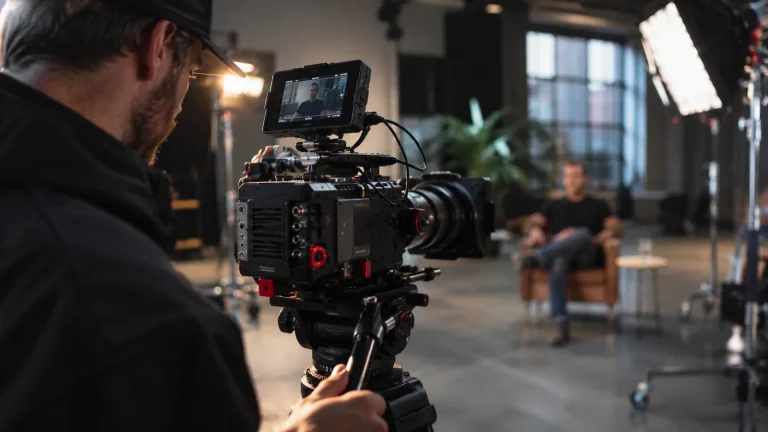
Step 7: Make a specific creative and filming brief
Video should follow the campaign’s evidence, not merely its aesthetic. Before hiring a videographer, answer these questions:
What must a viewer understand after 15 seconds? Perhaps that a product can be demonstrated in a real environment, that a sporting challenge has launched or that a new store has opened.
What is the one moment we cannot miss? A reveal, product test, athlete appearance, prize announcement or customer demonstration may be scheduled for a precise time. Share the running order with the camera team.
Which platforms are the edits for? A wide website case-study film, a vertical social clip, an internal presentation and a sponsor report need different framing and pacing. Plan vertical-safe composition at the shoot instead of assuming every horizontal clip will crop elegantly.
Whose approval is required? Agree the client’s reviewer, sponsor rights, venue permissions, consent arrangements and who can sign off the first edit.
What happens to raw footage? Confirm whether the agreement includes final edited files only, additional cutdowns or licensed raw material. Do not assume all original footage is included automatically.
A lean shoot brief should include the audience, messages, schedule, essential shots, interview questions, deliverable formats, file delivery requirements and key rights restrictions.
How to measure results without making up ROI
Build measurement around the primary objective. You might record the number of relevant visitors, participation rate, quality of demonstrations, qualified leads, meetings booked, sample redemptions or purchases attributable to a particular offer. For a community experience, return participation may be more useful than immediate sales.
Illustrative calculation: If 800 relevant people encounter the activation, 160 meaningfully participate and 32 book a demonstration, the participation rate is 20% of those reached and the booking rate is 20% of participants. Those numbers alone do not tell you how much profit the activity generated.
Where a commercial outcome is important, compare attributable incremental profit with the full campaign cost using a consistent time window. Be honest about attribution limitations; someone who sees a campaign video may buy later through an entirely different channel.
Five useful questions for the post-event review
What did people actually do? Which interaction caused the most interest? Did the correct audience participate? What questions or objections did staff repeatedly hear? Which video assets were used after the event and what action did they support?
Include negative findings. A quiet demo station or poor signage is information that can improve the next activation.
Campaign example: a fictional independent sports brand
Imagine a Manchester sports brand launching a new training accessory at a local padel event. Its objective is to demonstrate the benefit to club managers and coaches, not to collect as many random entries as possible.
The activity might invite visitors to try a three-minute coached exercise and compare the experience with their normal routine. Staff record structured feedback, and relevant trade prospects can request a follow-up. A videographer captures the demonstration, context, expert explanation and approved customer responses. The brand later uses short clips to explain the product on its website and social channels.
This is a hypothetical example, not a Videographer Manchester client case study. Its usefulness lies in the alignment between objective, audience, experience, next step and content plan.
Common reasons activation strategies fail
They begin with a visual concept rather than a business need. They try to appeal to everybody. Their staff cannot explain the offer. The location looks good but reaches the wrong audience. The most important action has no clear owner. The content is filmed without knowing who will use it. The report celebrates impressions but cannot explain what changed.
The remedy is usually not more technology or budget. Simplify the experience, agree the purpose and rehearse the customer journey with real people before the opening.