What is B-roll in video production? See practical business examples, a 10-shot checklist and filming tips for stronger corporate and social videos.
You can have a brilliant interview and still end up with a film that feels a little flat. The person on camera might say all the right things, but watching them talk for two minutes isn’t always the best way to tell the story.
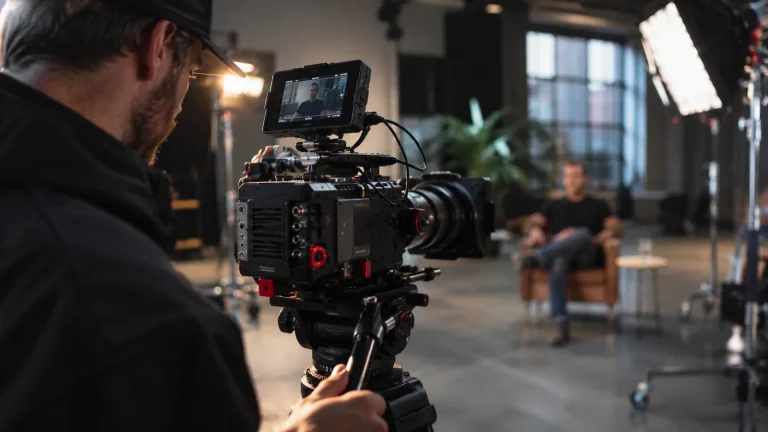
That’s where B-roll comes in. It’s the supporting footage that gives the viewer something to see while the main story continues: a team at work, a close-up of a product, a machine running, the venue before guests arrive, or somebody reacting to what has just happened.
In this guide, we’ll explain what B-roll actually means, how it differs from A-roll, which shots are worth planning, and why it makes such a difference to corporate films, events and social media videos.
What is B-roll footage?
B-roll is supplementary video footage used to support, illustrate or add context to the main footage in a film. The main material is often called A-roll. In a customer testimonial, the interview is usually A-roll and shots of the customer using the product are B-roll. In a conference film, a speaker may provide the main narrative while shots of the audience, exhibition stands and networking help tell the wider story.
B-roll isn’t necessarily slow motion, drone footage or something cinematic. A simple, steady shot of a person doing their job can be more useful than a dramatic camera move if it shows what the speaker is talking about.
The best supporting footage answers a question the viewer may not even realise they’ve asked: What does this look like in real life?
A-roll vs B-roll: what’s the difference?
| A-roll | B-roll |
|---|---|
| The main interview, explanation or action | Supporting footage that adds visual context |
| Usually carries the key spoken message | Often plays beneath voiceover or an interview |
| Explains what happened or why something matters | Shows the people, process, product or setting |
| Example: a founder describing a new product | Example: close-ups of the product being tested |
There’s no rule saying every film must contain both. A beautifully filmed product demonstration might carry its story almost entirely through visuals. But for most business-led films, mixing the two creates a more natural viewing experience.
Eight B-roll examples for UK businesses
1. Corporate interviews
If a managing director is explaining how a company works, capture the people and environment they’re talking about. That might mean informal conversations between colleagues, a genuine meeting, the reception area or a team member working with a customer. The footage should reflect the business as it really operates, rather than inventing activity purely for the camera.
2. Manufacturing and engineering
Close-ups of materials, machinery, calibration, hands assembling components and the finished product can make technical information far easier to understand. Get a wide shot to establish the scale of the facility, medium shots to show the process, then detail shots that explain what makes the work distinctive.
3. Hotels and hospitality
A hotel interview can be supported with rooms, food service, guest areas, staff preparing spaces and carefully framed architectural details. Film the space as a guest would experience it, not just as a series of empty rooms.
4. Product films
Show the product being handled, opened, installed or used. If a feature is important in the script, the audience should have a chance to see that feature. A product film becomes much more convincing when the footage does real explanatory work.
5. Events and conferences
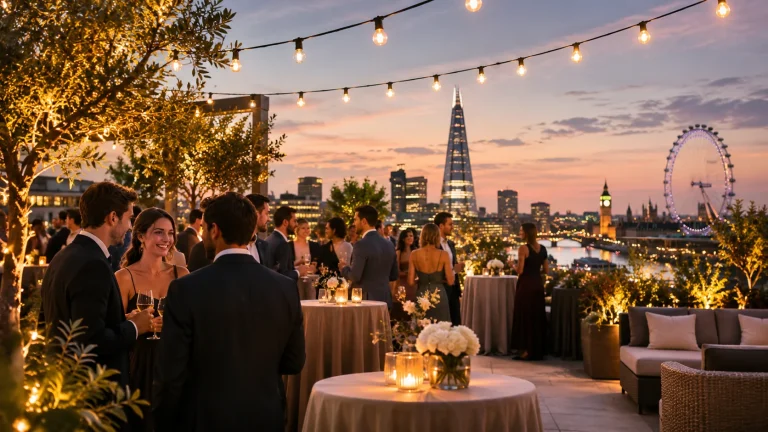
Registration, speaker preparation, audience reactions, networking, branded spaces and the atmosphere between sessions can help turn a set of speeches into a story about the whole event. The challenge is anticipating moments you won’t be able to recreate later.
6. Customer testimonials
A customer explaining a result is useful. Seeing the customer’s workspace, the problem being addressed and the product in action adds the proof and context. Don’t stage a misleading outcome or imply that an illustrative shot is evidence of something that didn’t happen.
7. Restaurants and food brands
Ingredients being prepared, a chef finishing a plate, a drink being poured and guests enjoying the atmosphere can work well. Food needs careful lighting and timing; a few deliberate shots often beat an hour of random footage.
8. Social media content
For short-form video, B-roll gives an editor opportunities to keep the image moving without cutting away from the point. It could be packaging an order, testing a product, reviewing design work or the details of a new location. It also makes it easier to produce several clips from one filming session.
Our B-roll shot list for a business filming day
Before a shoot, we look at the interview questions or main messages and write down the visuals that would actually support them. A useful starting point is:
- Establishing shot: enough of the location to show where the story takes place.
- Workplace wide shot: the team or process in its proper context.
- Medium action shot: a person completing a genuine task.
- Detail shot: hands, equipment, materials or a useful product feature.
- Interaction: a natural conversation or customer handover, with permission.
- Process sequence: beginning, middle and end of something being done.
- Product in use: how the product or service fits the customer’s world.
- Reaction: a meaningful response rather than an artificial smile for camera.
- Environmental texture: signage, light, movement or relevant atmosphere.
- Closing shot: a final action or visual that works with the film’s call to action.
Not every shoot needs all ten. A manufacturer may need more process details; a people-led film may need more interactions. The shot list should follow the story rather than dictate it.
How to film B-roll that editors can actually use
Capture sequences, not isolated pretty shots
A three-shot sequence — a person walks to the machine, operates the controls, then checks the result — is more useful than three unrelated shots of the machine. The sequence gives the editor a coherent way to explain the process.
Give each shot enough time
Avoid ending a shot immediately after the action starts. Hold a steady frame before and after the important moment. This gives the edit room to breathe and makes it easier to work with interview audio.
Pay attention to natural sound
B-roll isn’t always silent. The sound of machinery, footsteps, a crowd or a product being handled can make a film feel far more present. Clean natural sound also provides useful transitions between scenes.
Film for where the video will appear
A wide corporate film and a vertical Reel may need different framing. A shot that looks great in 16:9 can be impossible to crop to 9:16 without losing the subject. If you need social edits, agree the formats before filming and allow space around the action.
Match lighting and colour where it matters
Supporting footage should feel part of the same film. Huge changes in colour, exposure or visual style can make the edit distracting. Consistency matters more than making every shot look dramatic.
Plan permissions in advance
Check whether everyone appearing on camera is happy to be filmed, whether the venue has any restrictions, and whether sensitive screens, client information or branded material need to be kept out of shot. For schools, healthcare and private workplaces, the planning is particularly important.
Can you use stock footage as B-roll?
Yes, where it is appropriately licensed and doesn’t misrepresent your business. Stock can help with a broad concept or an establishing shot that isn’t practical to film. But it rarely replaces real footage of your team, process or premises when customers want to understand what makes your company different.
Be especially careful with testimonial or case-study films. Don’t use a generic factory or office to imply it is the client’s actual site, and don’t suggest a stock actor is a customer.
Why B-roll helps you get more from one shoot
A well-planned filming day can supply enough material for more than one edit. A long-form interview may become a website film, two LinkedIn clips and several short question-and-answer videos. Useful B-roll makes those shorter edits feel designed rather than simply cut down.
That doesn’t mean one shoot automatically produces unlimited social content. It means planning the questions, formats and supporting shots together can make the footage work harder. Our corporate videography and social media videography pages explain how we approach those different formats.