Explore the original RED KOMODO 6K, its global shutter, 6K RAW recording, frame rates and the types of commercial shoots it suits.
Small cinema cameras have changed what a crew can achieve with a limited footprint. The RED KOMODO 6K is a good example: a compact camera with a Super 35 sensor, REDCODE RAW recording and a global shutter. That combination made the original KOMODO interesting for filmmakers who wanted cinema-camera image control without building an enormous rig.
This guide focuses on the original RED KOMODO 6K, not the newer KOMODO-X. The two share a family resemblance, but their recording speeds, media and operational options are not the same.
RED KOMODO 6K specifications at a glance
According to RED’s published technical guide, the original KOMODO uses a 19.9-megapixel Super 35 global-shutter CMOS sensor with an effective resolution of 6144 × 3240 pixels. RED specifies more than 16 stops of dynamic range. It uses an RF lens mount, records REDCODE RAW, and supports qualified CFast 2.0 recording media.
The main headline recording limits include up to 6K 40fps at 17:9, 4K 60fps at 17:9 and 2K 120fps at 17:9. Frame-rate availability depends on the selected recording window, quality setting and other camera configuration. These figures shouldn’t be confused with the KOMODO-X’s faster recording options.
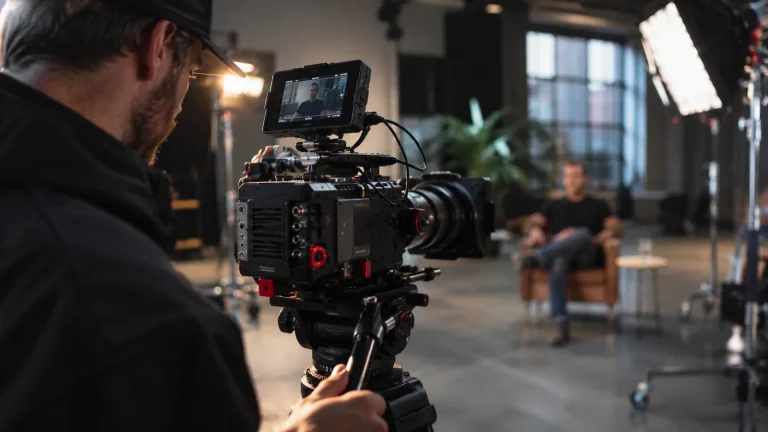
The camera body is compact, but a working shoot still needs lenses, monitoring, audio, battery power, media, supports and often additional rigging. ‘Small camera’ does not mean ‘no production equipment’.
Why is its global shutter so useful?
A traditional rolling shutter reads an image progressively. When something moves very quickly, vertical edges can look skewed and certain lights can produce banding. The KOMODO’s global shutter captures the image simultaneously across its sensor, reducing those problems.
This is attractive for fast-moving products, vehicles, energetic commercial sequences and camera moves where straight lines matter. It is not permission to ignore exposure, lighting or practical safety; all three still determine the quality of the footage.
What does 6K give you in the edit?
A high-resolution master can create options. If a project has to appear on a website hero, a YouTube channel, a 16:9 presentation and a vertical Reel, the editor may be able to extract several sensible crops. That doesn’t mean you can turn one camera angle into ten genuinely different shots, but it can reduce the need for duplicate takes when the framing has been planned.
Resolution can also help with minor stabilisation or precise composition changes. Editors still need to protect sharpness, grain and colour consistency when creating multiple versions. The final output could be 4K or 1080p; capturing in 6K is a production choice, not a promise that viewers receive a 6K file.
Where does the KOMODO work particularly well?
Interviews and talking-head films. With controlled lighting and a suitable lens, the camera can capture detailed footage that responds well to careful colour grading.
Products and demonstrations. Compact rigging can be useful around machinery, display units, vehicles and relatively tight product setups.
Gimbal and moving-camera sequences. The small body can be easier to balance than a larger cinema package, although total rig weight still depends on the lens, power and accessories.
Commercial and brand work. RAW recording gives post-production flexibility when the production needs a considered visual treatment or several delivery formats.
Vehicle and action details. Global shutter can help manage movement-related image artefacts, provided the shot is carefully planned and safely executed.
What are the compromises?
First, the original KOMODO does not give you the same high-frame-rate options as the KOMODO-X. If 6K slow motion is central to the creative treatment, compare recording modes before choosing a camera. Second, a cinema workflow often creates more data than a lightweight social-media workflow, and the production needs enough time for media management, backups and finishing.
There are also practical rigging compromises. You may need external audio equipment, dedicated monitoring, lens adapters or specialised support. None of these is unusual in a cinema shoot; they’re simply items that need to appear in the planning and budget.
RED KOMODO 6K versus KOMODO-X
The original KOMODO reaches 6K 40fps, whereas RED specifies 6K 80fps on the KOMODO-X. The original uses CFast 2.0 media and a standard RF mount, while KOMODO-X uses qualified CFexpress media and an integrated locking RF mount. Both are Super 35 global-shutter cameras.
That does not make the original obsolete. If the desired shots sit within its recording capabilities, it may be a sensible rental or production choice. The important thing is matching the setup to the job.
Does the footage automatically look cinematic?
No. Lens character, lighting direction, production design, art direction, blocking and sound are often more noticeable to a general audience than the camera name. An expensive body pointed at an unplanned scene can look ordinary. A modest camera used by a strong team can produce excellent work.
For a business briefing a production company, it is more useful to ask to see relevant work and discuss the intended treatment than to demand one camera model.
Technical sources: Original KOMODO 6K specification; KOMODO-X specification.