Thinking about RED camera hire? Compare UK rental examples, typical kit inclusions and equipment-only hire versus a full video production.
A RED cinema camera can be a substantial investment, and you don’t need to own one to film with it. For many freelancers, agencies and production companies, hiring the right system for a specific shoot is a sensible way to get professional equipment without committing to a permanent kit.
But ‘RED camera hire’ can mean very different things. A rental company may supply equipment only. An owner-operator may arrive with a camera and shoot the day. A production company may manage the entire brief, including planning, lighting, sound, editing and final delivery. Those are different services with different costs.
What does RED camera hire actually include?
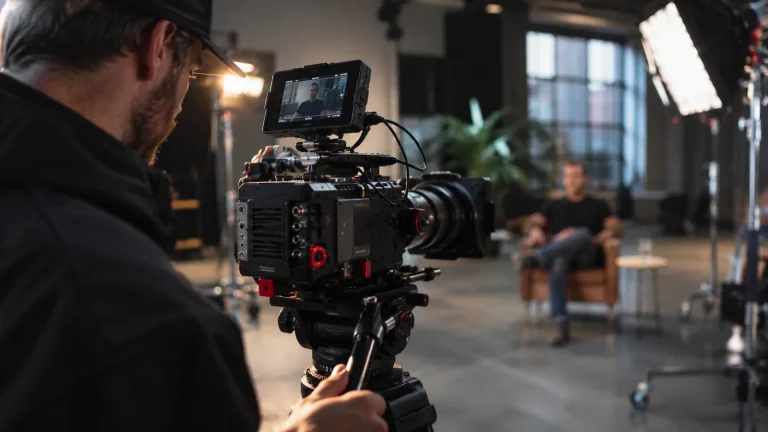
Start with the itemised kit list. A listing might include a camera body and battery, or a configured package with several batteries, cards, adapters and support. It may not include lenses, filters, monitoring, tripod, gimbal, audio equipment or lighting. An attractive promotional image of a fully rigged camera isn’t evidence that every item is in the day rate.
Ask the rental provider whether media, readers and battery chargers are included and whether there are collection, delivery, insurance or damage terms. Also confirm whether the rate is excluding VAT and how multi-day hire is charged.
Example UK RED camera hire prices
To illustrate the difference between systems, FOMO Rentals publicly lists the following guide day rates excluding VAT, checked in November 2026:
| RED camera | Listed day rate | Notes |
|---|---|---|
| RED KOMODO 6K | £160 | Compact 6K camera; confirm the included kit |
| RED KOMODO-X | £200 | Faster 6K option; accessories may vary |
| RED V-RAPTOR 8K VV | £600 | Higher-end 8K system; check the exact model |
These are examples from one rental house, not industry-wide fixed prices. Other UK hire companies publish different rates. Availability, weekend or weekly rates, the supplied camera package, specialist accessories and insurance can change the final cost substantially.
When is hiring better than buying?
If a camera is needed for only a few projects each year, buying it can tie up money that would otherwise go towards lenses, crew, lighting or marketing. Hire allows the production to choose the camera for each brief rather than trying to make a single owned model suit every job.
Renting is also useful for testing equipment before buying, taking on an unusually demanding shoot or adding a second camera for a particular sequence. A production can hire a compact KOMODO for mobile work or a different body when high frame rates and larger-format capture become important.
However, rental becomes less attractive when usage is frequent, downtime is high or the production already relies on a consistent owned camera system. The decision is financial and operational, not just technical.
What about lenses and the rest of the package?
The camera body is only one element. The choice of lens affects perspective, focus behaviour, framing and the character of the image. Lighting and sound usually have a larger effect on the audience’s experience than the logo on the body. A complete hire list may also need tripods, stands, grip, monitors, batteries, drives and appropriate cases.
When comparing quotes, specify the actual shoot: a full-day corporate interview, a product commercial with controlled lighting, a moving gimbal sequence or a conference. Two very different kit packages might be appropriate for those different days.
Equipment-only hire versus an operator
Equipment-only hire means you are responsible for assembling and operating the camera appropriately, arranging insurance and managing the recording workflow. It may make sense if you have an experienced in-house crew.
Hiring an experienced camera operator can remove some of that responsibility, but it does not necessarily include a producer, director, sound recordist or editor. A camera operator’s day rate and a cinema camera rental fee may be separate line items.
A fully managed video production normally adds creative planning, shot lists, scheduling, filming, editing, colour, sound, licensing and delivery. That is why you cannot accurately compare a production quote to a rental-house camera price.
What to check before confirming a RED rental
Confirm the exact model and version—not just ‘V-RAPTOR’. Check recording modes and frame rates against the shot list. Make sure the rental package includes suitable media, sufficient power and the correct lens adapters. Check who is responsible for data backups and whether the post team can handle the R3D files produced by that camera.
You should also know when the kit must be returned, who carries risk for damage, whether collection or courier costs apply and whether the operator has used that exact model before. A pre-shoot camera test can avoid expensive surprises on filming day.
When a different camera may be better
If a job needs to be filmed unobtrusively, handheld for long periods or turned around within hours, a lightweight professional video camera may give a better result at a lower overall cost. If the brief is dominated by interviews, a well-lit and well-recorded scene can be more valuable than 8K RAW acquisition.
Choose the setup that protects the production rather than the equipment that sounds most impressive.
Hire-rate references (checked November 2026): FOMO Rentals rate card; VMI RED camera hire listings; Cameraworks RED KOMODO 6K example.