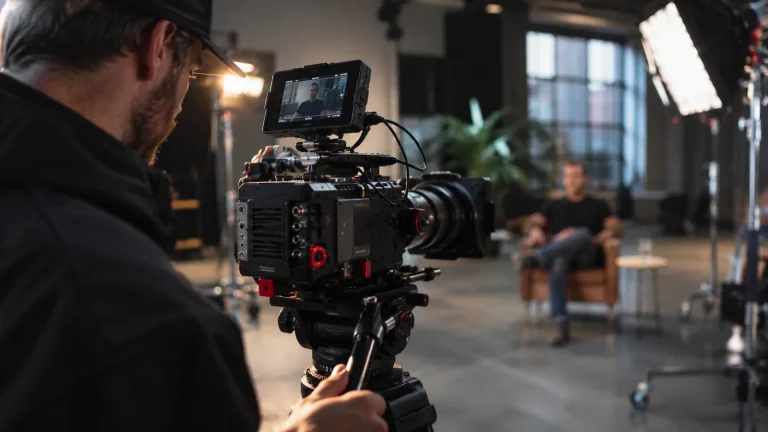
A practical RED V-RAPTOR guide covering 8K filming, large-format sensors, frame rates, global-shutter variants and commercial production.
At the high end of digital filmmaking, the camera has to cope with more than a beautiful single frame. Production teams may need fast action, detailed product textures, a complex lighting design, demanding colour work and several different versions of the same commercial. RED’s V-RAPTOR family sits in that part of the conversation.
The name can be confusing because there are several versions. The original V-RAPTOR 8K VV and the newer V-RAPTOR [X] 8K VV are related but not identical. The [X] version incorporates global shutter technology, while the original V-RAPTOR uses a different sensor readout design. When comparing specifications, always check the precise model name.
What is the RED V-RAPTOR?
V-RAPTOR is a family of high-end digital cinema cameras from RED. The original V-RAPTOR 8K VV supports recording at up to 8192 × 4320 pixels, with a large-format sensor and high frame-rate options. RED specifies more than 17 stops of dynamic range for the relevant V-RAPTOR models.
The V-RAPTOR [X] 8K VV uses a 35.4-megapixel large-format global-shutter CMOS sensor, with an effective 8192 × 4320 capture area. RED’s published technical guide lists up to 120fps at 8K 17:9, depending on recording settings.
Those are significant specifications, but they don’t mean every production benefits from recording at maximum resolution or maximum frame rate. A camera package is selected to serve the story and delivery requirements.
What does ‘8K VV’ mean?
8K describes the approximate horizontal pixel count. VV refers to RED’s Vista Vision-sized imaging format. A larger imaging area influences lens selection, field of view and depth-of-field possibilities, but it doesn’t automatically create a better composition.
The advantage of a large, detailed original can be the flexibility to reframe in post. For example, a wide corporate environment shot might be used as a website banner, a vertical social crop and a tighter cutaway. However, this only works well if the original framing and focus support those different crops.
More pixels also mean more data. Storage, backup, transcoding, colour grading and archive plans become more important on a substantial 8K project. That is why post-production should be discussed before the camera is booked.
Why do high frame rates matter?
Higher frame rates allow motion to be played back more slowly at normal delivery frame rates. That may be useful for liquids splashing, machinery operating, fabrics moving, athletic performance or atmospheric event details.
There is a difference between ‘high frame rate available’ and ‘we should use it’. A film with a strong message needs pacing, interviews and sound just as much as dramatic B-roll. The cinematographer and editor should agree where slow motion earns its place in the sequence.
Original V-RAPTOR versus V-RAPTOR [X]
The original V-RAPTOR is an 8K large-format camera with a standard sensor readout; V-RAPTOR [X] combines the family with a global-shutter sensor. Global shutter reduces movement-related skew and can be especially relevant for fast pans, strobing light and rapid subject movement.
Some other camera-system details also vary across iterations and mounts. Never buy accessories, choose media or quote production capabilities from an article about ‘V-RAPTOR’ without confirming the exact body and firmware in use.
What kinds of commercial productions suit V-RAPTOR?
High-end brand campaigns. A project with carefully designed lighting and a distinctive colour grade can make use of RAW capture and the camera’s detailed image.
Product and automotive films. Controlled highlights, moving cameras, fast action and visual effects can place useful demands on camera and post-production capabilities.
Multi-format campaigns. When a client needs website, broadcast, paid-social and digital-screen outputs, a well-planned high-resolution master provides options for reframing and finishing.
Complex studio productions. Larger crews may value camera-system integration and professional monitoring, though a suitably configured alternative can also work.
When is a smaller camera the smarter choice?
When a business wants six short social clips in one afternoon, a product demonstration in a cramped office or a rapid edit for a conference, using a large cinema setup may introduce cost and complexity without meaningful value. Smaller systems can be faster to position, easier to carry and less intrusive around contributors.
The camera choice should be proportionate to the brief. A good producer will explain where expensive equipment makes a difference and where it doesn’t.
What else goes into a V-RAPTOR shoot?
Cinema lenses, filtration, support, monitoring, power, media, sound recording, lighting and skilled crew all shape the result. A camera body doesn’t include the full production. A colour-managed workflow is particularly important if the intention is to use RAW material for careful grading.
It’s also sensible to agree source-footage rights, delivery formats, backup arrangements and review rounds in advance. Those details are more important to the client than the camera’s peak specification once filming is over.
Technical sources: Original V-RAPTOR technical guide; V-RAPTOR X specifications.