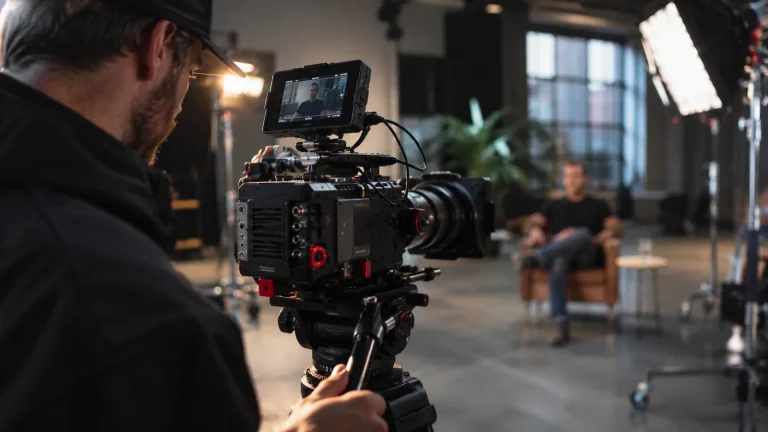
Discover how video can strengthen your brand's visibility in AI search, build trust and make your business easier to discover, understand and recommend.
Your next customer might not find you by searching through ten blue links. They might simply ask an AI tool which business to choose.
Think about the way people now research a purchase. Someone looking for a new accountant might ask ChatGPT which firms in Manchester explain their services clearly. A homeowner might ask Google AI Mode which type of garden room is right for their space. A marketing director might ask for a shortlist of production companies with relevant experience.
These are not always short, keyword-only searches. They are questions about expertise, suitability, trust and proof. And if a business wants to be considered, it needs to give search systems and actual customers something useful to work with.
This is where video has a growing role.
A well-planned video can show the people behind a brand, demonstrate a product, answer a specific question or make a complicated service understandable in a couple of minutes. Combined with a strong website, searchable written content and sensible distribution, it creates more opportunities for a brand to be discovered and evaluated.
But there is an important distinction: publishing a video does not automatically make ChatGPT, Google or any other AI tool recommend your business. AI systems use different sources and methods, and no one can guarantee that a particular video will be watched, cited or used in an answer. The opportunity is to create genuinely useful evidence and make it accessible.
What does it actually mean when AI recommends a brand?
A recommendation can mean several things. A search tool might mention a company by name, include it in a shortlist, cite a page on its website or surface a relevant video when answering a question. Sometimes it will provide a direct link. Sometimes the customer will remember the name and search for it later.
This is different from simply appearing for a broad keyword.
A conventional search might be “corporate videographer Manchester”. A more detailed AI-assisted search might be “Which Manchester videography companies could film a series of customer interviews and deliver clips for LinkedIn?”
The second request includes the service, location, intended output and practical requirements. To be a useful result, a business needs to show more than a generic promise of quality. It should explain what it does, demonstrate how it works and provide evidence that matches the brief.
Google’s official guidance for generative AI search says its AI features build on core Search systems and can surface relevant images and videos, as well as website links. That is a meaningful opportunity for video, but the foundations are still good SEO and useful content.

Six ways video can support brand visibility in AI search
1. It turns a broad claim into something people can verify
Every business says it is knowledgeable, experienced and customer-focused. Video gives you a chance to show what those words mean.
A manufacturing firm can demonstrate a process. A dentist can explain what a consultation involves without making unrealistic treatment promises. A hotel can show the actual rooms and event spaces. An accountant can answer a frequently asked question in plain English.
None of this requires an elaborate advert. In fact, a straightforward explanation from someone who knows the subject can be more useful than a highly polished montage with no real information.
The value is not that an AI system automatically treats an on-camera expert as trustworthy. The value is that the business has created original, checkable material which can support stronger pages, useful summaries and more confident customer decisions.
2. Videos can appear as discoverable search content
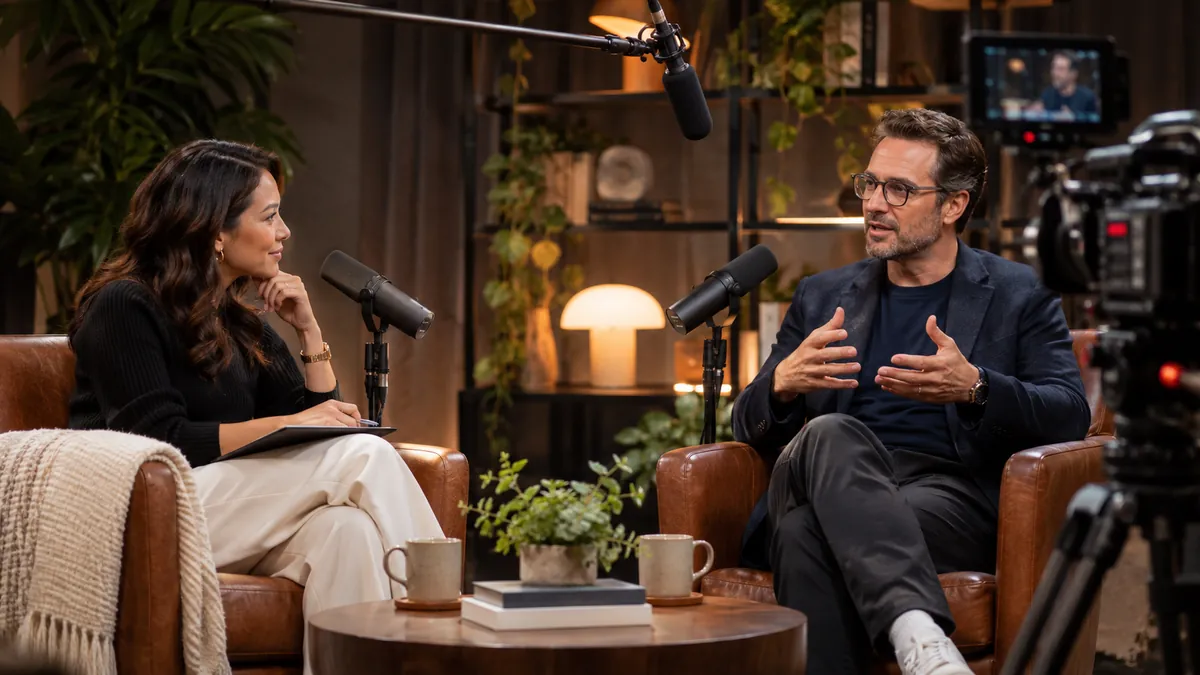
Google has explicitly said that relevant videos can appear in its generative AI search experiences. Its video SEO documentation also covers how video can be eligible for traditional Google Search, Video mode, Images and Discover.
For a business, that creates another potential route into the customer journey. A useful demonstration could be discovered because someone searches for how something works, while an interview could support research into a service or specialist topic.
However, being eligible to appear is not the same as being guaranteed a placement. A video still needs a useful topic, a discoverable page, good metadata and a reason for somebody to watch it.
3. Good transcripts make useful knowledge easier to find
Imagine a two-minute video where a surveyor explains what buyers should check before commissioning a property survey. It might contain excellent advice, but if the website only embeds the video with a heading saying “Our latest film”, a visitor has very little context before pressing play.
A much stronger page includes a clear title, a short summary, the video, a readable transcript or carefully written explanation, and links to the related service.
That written content makes the subject understandable without forcing someone to watch. It also gives search systems a conventional, crawlable page to evaluate. On YouTube, captions help accessibility, although automatic captions should always be reviewed because they can contain mistakes.
The important point is not to paste a transcript simply to tick an SEO box. Edit it for clarity, keep the original meaning and add helpful context. A page should be valuable whether the visitor watches the film or reads the explanation.
4. Video provides original material for more of the web
One useful filming session can create much more than a single finished film.
A company might publish the full expert interview on a relevant website page, a shorter demonstration on YouTube, a concise answer on LinkedIn and a series of short clips for social platforms. The same project can also support an illustrated article, a customer story or a detailed FAQ.
That does not mean every repost or social clip will be crawled or used by an AI tool. Different platforms make content available in different ways. But it does give the brand more opportunities to reach real audiences, earn genuine references and build a consistent public explanation of what it does.
The goal should be a useful body of evidence across relevant channels, not an exercise in posting the same clip everywhere for the sake of it.
5. Customer stories answer the questions behind a buying decision
A buyer wants to know whether the business understands their problem, how the work is delivered and what happened for people in a similar position.
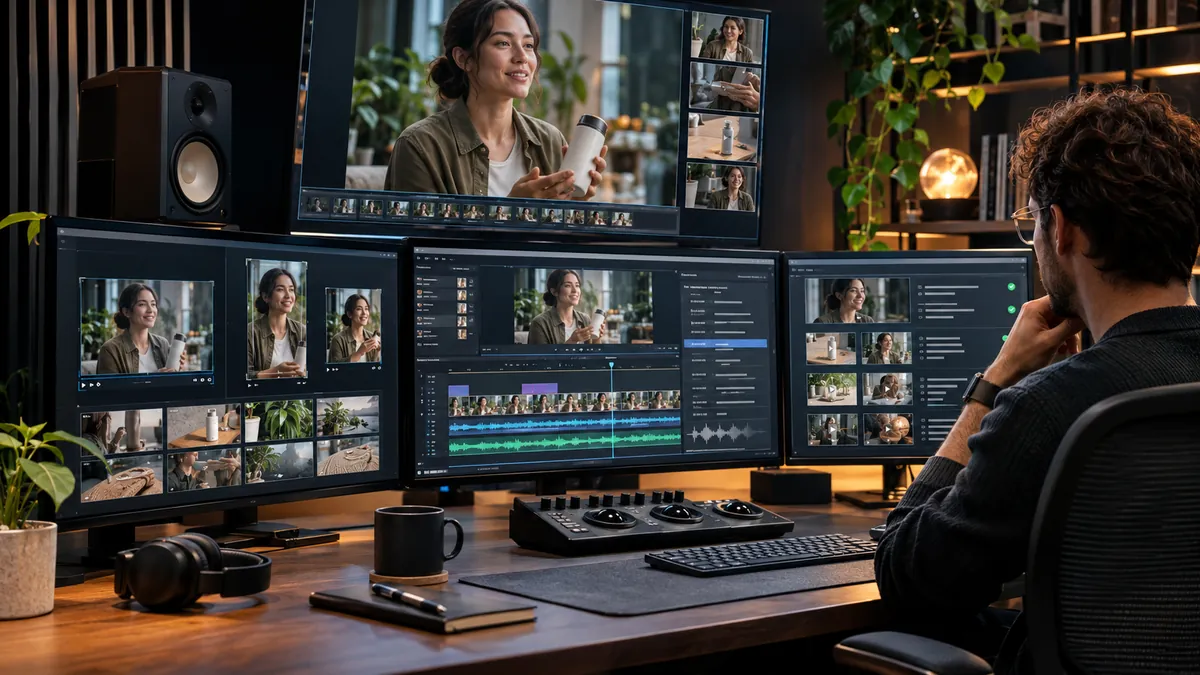
A thoughtful customer case-study video can help with all three. Instead of simply praising a supplier, it can explain the original challenge, the decision process, the work completed and an outcome the client is happy to discuss.
It is important to keep claims accurate and obtain permission for any testimonial or result. A vague “we increased sales dramatically” is less helpful than an honest account of the brief, the approach and the evidence that can be shared.
Case-study video is valuable even when an AI tool never cites the video itself. If a customer discovers your brand through search and then lands on the site, the film can help them decide whether to enquire.
6. Video makes your brand memorable after the recommendation
AI visibility is not the final objective. The final objective is a relevant enquiry, sale, booking or conversation.
Being included in a shortlist is useful, but the buyer still needs a reason to choose you. A clear brand film, genuine team introduction, product demonstration or customer story can do the human part of the job: make the business feel understandable and credible.
This is why we would avoid treating video purely as an AI optimisation trick. Good video needs to work for the viewer first. Any search benefit should sit alongside that, not replace it.

What types of video should businesses create first?
Not every company needs a glossy commercial. A better starting point is to look at the questions people ask before buying and the evidence that would make the answers more convincing.
Expert-led question and answer videos
Film a knowledgeable team member answering one real customer question at a time. This works particularly well for accountants, solicitors, technical manufacturers, healthcare practices and other businesses where people need reassurance or an explanation before they enquire.
Choose questions with substance, such as “What affects the price?”, “How long does the process take?” or “What is included?”. Avoid producing ten nearly identical clips that offer no real insight.
Product and service demonstrations
Show the product being used, the differences between options, the set-up process or the details a photograph cannot explain. This can be useful for e-commerce brands, engineering companies, specialist products, gym equipment and home improvement businesses.
A good demonstration does not need to make exaggerated claims. Showing the limitations, suitable use cases and practical trade-offs can make it more helpful.

Customer testimonials and case studies
Let a real customer describe the problem they wanted to solve, why they chose the company and what the experience was like. Combine the interview with relevant footage of the service, workplace or finished project.
Keep the story truthful and specific. A testimonial should sound like a customer, not a scripted advertisement.
Behind-the-scenes and team videos
Show where the work happens and introduce the people responsible. For a manufacturer, that might mean a tour of the workshop. For a hotel, it could mean the events team preparing a venue. For a creative company, it might mean a look at the production process.
These films are particularly helpful when a buyer is deciding whether the organisation is a good fit.
Location and industry-specific explainers
If you operate nationally or serve several distinct industries, film content that answers genuinely different local or sector questions. A building contractor might explain how access affects a city-centre project. A videographer might explain the difference between filming a conference and filming a trade exhibition.
Don’t create dozens of identical clips with place names swapped in. Each video should exist because it provides something useful for that audience.
How to make a video genuinely useful for AI-era search
A good filming day is only half the job. What happens when the film goes live matters just as much.
Start with a clear search question. Choose an issue your customer actually wants resolved, not a vague topic such as “why we’re great”. Then answer that question directly in the opening part of the video.
Give the film a descriptive title. “What does a full-day corporate video shoot include?” is more useful than “Brand Film 2026”. Explain the topic in the accompanying page title, headings and description too.
Publish it in the right place. Put the video on a relevant service, case-study or advice page, supported by useful original text. A dedicated video page can make sense where watching that particular video is the main reason to visit.
Include a checked transcript or useful written summary. This helps users who cannot or do not want to watch and gives the page meaningful context. Check names, industry terms, numbers and claims carefully.
Use appropriate technical video SEO. Google recommends discoverable embeds, valid thumbnails, and video metadata. Where appropriate, use VideoObject structured data and consider video sitemaps. These help Google understand or discover video content; they are not special switches for AI recommendations.
Make sure search crawlers can access the website. In addition to normal technical SEO, website owners who want eligibility for ChatGPT search should check access for OpenAI’s OAI-SearchBot. OpenAI distinguishes this search crawler from GPTBot, which is related to model training. Allowing one does not require allowing the other.
Distribute the film where your customers spend time. For a B2B business that may mean LinkedIn and YouTube. For a restaurant or hospitality venue it may mean Instagram and other visual platforms. The right channels depend on the audience, not which platform currently gets the most attention.
Review and improve it. If the questions change, the service changes or your advice becomes outdated, update the page and video where practical. Content that is useful and accurate is more valuable than a large archive of neglected uploads.
Example: one filming day, several useful assets
Let’s say a Manchester-based professional services firm wants to help prospective clients understand a complicated service.
Instead of spending the budget on one broad corporate film, it might plan a filming session around five genuine questions customers ask every week. During that session, the team could record short expert answers, one longer explanation of the process, footage of the workplace and a client interview if permission is available.
The output could include:
- One main service explainer embedded on the relevant service page.
- Five short answer-led clips, each with a descriptive title and useful written summary.
- A customer story showing the original challenge and how the firm approached it.
- Selected short edits for LinkedIn, YouTube Shorts and other appropriate platforms.
- A more detailed written guide that links back to the relevant services and videos.
That is a more sensible use of a filming day than commissioning one video and hoping it somehow becomes an AI ranking signal. It gives the company content that addresses real questions at several stages of a decision.
Does YouTube help with AI recommendations?
YouTube can be a useful home for searchable educational and demonstration videos, and its content can also appear in Google search experiences. But uploading to YouTube does not guarantee that ChatGPT or Google AI Mode will mention your brand.
Treat YouTube as one part of a wider publishing strategy. Give videos accurate titles, clear descriptions, chapters where useful and checked captions. Then connect them to relevant pages on your own website so visitors can understand your services and take the next step.
It’s also worth remembering that a YouTube view, a Google video appearance and a named recommendation inside an AI response are three different outcomes. Measure them separately.
How can you measure whether video is helping AI visibility?
Start with a baseline and avoid promising certainty where the data is incomplete.
Search visibility: Use Google Search Console to monitor relevant search queries, pages and video indexing. Where available, review Google’s generative AI performance reporting rather than assuming every organic visit came from an AI feature.
AI search referrals: Review website analytics for traffic coming from AI search experiences. OpenAI documents referral attribution for ChatGPT search traffic, including utm_source=chatgpt.com. Attribution is useful but will not capture every mention or every buyer who later searches for your brand directly.
Prompt checks: Track a small, consistent set of realistic buyer questions, such as “Which Manchester companies can film professional customer testimonials?” Record whether your brand appears, what sources are cited and whether those answers change. Treat this as directional research, not an official rank tracker.
Video engagement and enquiries: Measure relevant video views, watched sections where the platform provides them, enquiries, assisted conversions and the quality of leads. A video that helps the right customer enquire can be more valuable than one that accumulates a large number of unrelated views.
The best question is not “Did AI mention us today?” It is “Are more suitable customers discovering us, understanding what we do and choosing to get in touch?”
Can video alone make AI recommend your business?
No. And any agency promising that a certain number of videos will secure AI recommendations is oversimplifying the problem.
A video cannot compensate for a weak service, misleading claims, an inaccessible website or an absence of relevant information. Good AI-search visibility rests on a combination of useful content, technical accessibility, genuine expertise and the wider signals available to the search system.
Google has also warned against chasing unsupported AI optimisation hacks or manufacturing mentions. Its guidance focuses on high-quality, original content and the same fundamentals that matter for good SEO.
Video can be a valuable part of that work because it gives brands a chance to provide something more distinctive than another generic article. But there is no universal formula, and each AI platform works differently.
The opportunity for UK businesses
For businesses that rely on explaining a service, demonstrating a product or building confidence before someone buys, video is no longer just something nice to have on the homepage.
Used properly, it can create original content for the website, give customers genuinely useful answers, support discoverability in search and make the brand more convincing when someone arrives from an AI recommendation or a conventional Google result.
You do not need to turn every member of staff into a content creator, and you do not need a huge production budget to begin. A carefully planned filming day focused on real customer questions can be a very sensible starting point.

At Videographer Manchester, we help brands and businesses plan, film and edit purposeful content, from corporate interviews and customer testimonials to product and promotional films and short-form social video.
If you’re thinking about making video work harder across your website, search presence and marketing, email us at hello@marino.co.uk and tell us what you want customers to understand. We’ll help you work out what is actually worth filming.